

Eating and Swallowing Disorders
Eating and swallowing disorders (dysphagia) is a prevalent condition in neurological disorders such as stroke, where normal swallowing function is impaired. It is also observed in other clinical contexts, including head and neck cancer and chronic obstructive pulmonary disease (COPD). Older adults with multimorbidity and cognitive impairment or dementia represent a substantial subgroup frequently requiring healthcare and support due to dysphagia.
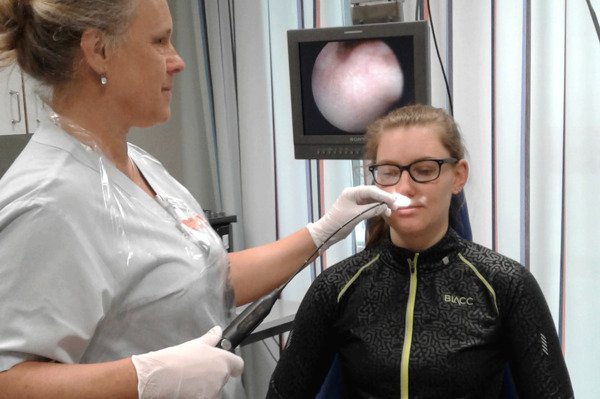
The condition is associated with significant risks, including reduced fluid and nutritional intake and aspiration, which may lead to pneumonia and, in severe cases, choking. Dysphagia further contributes to reduced participation and diminished quality of life, underscoring its status as a serious health concern.
Early identification and intervention are critical to minimizing complications. Current research initiatives focus on mapping the prevalence and characteristics of dysphagia and developing and validating novel assessment tools for use in healthcare and social care settings. Examples include studies on mealtime interactions between individuals with dementia and care staff, as well as investigations into the impact of COVID-19 on swallowing function.
Earlier or ongoing master projects
- Emmelie Persson
Repetitive Saliva Swallowing Test: norms, clinical relevance and the impact of saliva secretion - Emma Lindroos
Free from dysphagia? A test battery to differentiate between mild and no dysphagia - Isadora Telford
Effects of contagious yawning on saliva production and swallowing in adults with traumatic brain injury – a possible treatment method - Anna Alex
Assessing eating and swallowing in adults born with profound intellectual and multiple disabilities: Reliability and validity of a Swedish translation of the Dysphagia Assessment Package - Ann-Sofie Eriksson
Dysphagia in amyotrophic lateral sclerosis (ALS): The role of the ALS team to facilitate patient participation in dysphagia interventions. - Diana Kandic
Assistant nurses’ experiences of performing Gugging Swallowing Screen after a single theory and training session - Elin Littorin
A cross-cultural translation and validation of a feeding skills training program for caregivers - Sanna Jansson
The validity and reliability of the New Zealand SecretionScale (NZSS) translated into Swedish
Project group members
Per Östberg
Professor/Speech and Language PathologistKerstin Johansson
Assistant Senior LecturerJoakim Körner Gustafsson
Assistant ProfessorAli Reza Majlesi
Senior LecturerElias Ingebrand
Postdoctoral ResearcherIn collaboration with
Riitta Möller
Senior Lecturer/Senior PhysicianMalin Nygren-Bonnier
Senior Lecturer/Physcial TherapistMats Trulsson
Professor/Senior DentistBo Christer Bertilson
Affiliated to Teaching/TutoringResearch projects
- A project about mealtime and dementia where interactional and communicative processes are analyzed to understand how support for eating and swallowing is facilitated and how participation can be promoted in health care and social care.
- ReCOV – Recovery and rehabilitation after COVID-19: A multidisciplinary research project investigating the impact of the illness on patients, close family and staff. ReCOV
- Mouth workout to prevent sarcopenia and malnutrition
- How does it work to eat, chew and swallow? – A survey for people 65 years and older who visit a health central
- A planned project concerning guidelines for patient-centered information and communication during a flexible examination of the swallowing function (FEESS) after stroke
Selected publications
Dalum, J., Skott, P., …. Johansson, K., Sandborgh Englund, G. (2025). Effect of oral screen training after stroke - A randomised controlled trial. Gerodontology, 42(3): 380-385.
Eriksson, A-S., & Johansson, K. (2025). Dysphagia in amyotrophic lateral sclerosis (ALS): The role of the ALS team to facilitate patient participation in dysphagia interventions. Acta Logopaedica, 2, 1–19.
Gustafsson, K. Johansson, K. (2020). Efterlyses: systematiska insatser för äldre med dysfagi. Läkartidningen, 40.
Johansson K., Schalling E., & Hartelius L. (2021). Self-reported changes in cognition, communication and swallowing in multiple sclerosis: data from the Swedish MS Registry and from a national survey. Folia Phoniatrica et Logopaedica, 73(1), 50–62.
Lindroos, E., & Johansson, K. (2022). Free from dysphagia? A test battery to differentiate between mild and no dysphagia. Dysphagia, 37(3), 501–509.
Möller, R., Safa, S., & Östberg, P. (2016). Validation of the Swedish translation of Eating Assessment Tool (S-EAT-10). Acta Oto-Laryngologica,136(7), 749-53
Möller, R., Safa, S., & Östberg, P. (2020). A prospective study for evaluation of structural and clinical validity of the Eating Assessment Tool. BMC Geriatrics, 20(1): 269.
Persson, E., Wårdh, I., & Östberg, P. (2019). Repetitive Saliva Swallowing Test: norms, clinical relevance and the impact of saliva secretion. Dysphagia, 34(2), 271-278.
Skott, P., Åkesson, E., Johansson, K., Dalum, J., Persson, E., Karlsson, Å., Seiger, Å., McAllister, A., & Sandborgh‐Englund, G. (2024). Orofacial dysfunction after stroke—A multidisciplinary approach. Gerodontology, 41(3), 376–384.
Vogel, A.P., Keage, M.J., Johansson, K., Schalling, E. (2015). Treatment for dysphagia (swallowing difficulties) in hereditary ataxia. Cochrane Database Systematic Reviews, 13;11, CD010169