

Centre for Medical Radiation Science
Karolinska Institutet, KTH Royal Institute of Technology, Stockholm University and Region Stockholm are establishing a new centre for medical radiation science in Stockholm. By combining the universities' cutting-edge expertise in key research areas with healthcare expertise, this joint initiative aims to drive progress in developing the cancer treatments of the future.
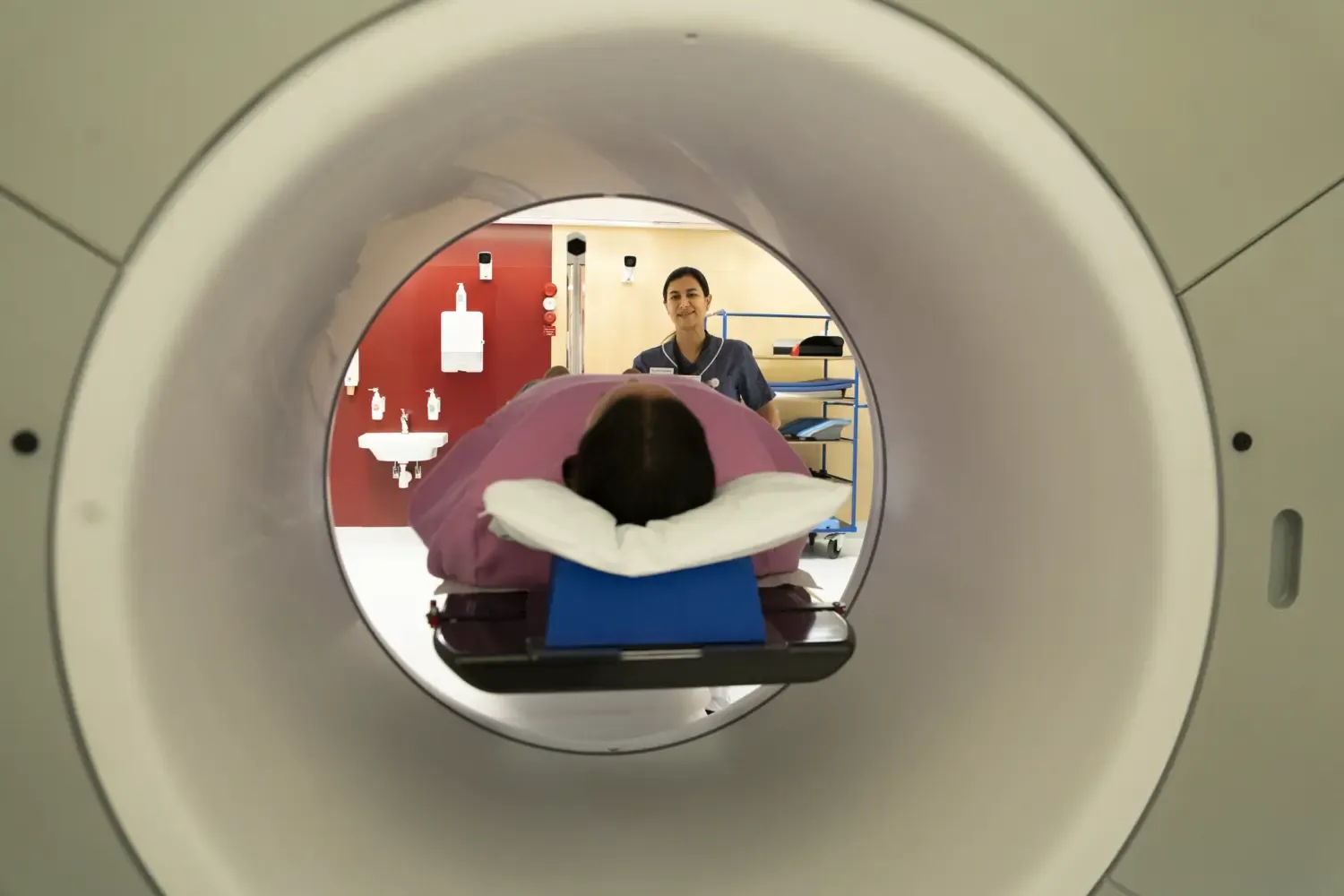
Radiotherapy is one of the cornerstones of modern cancer treatment and is given to around 60 per cent of patients with solid tumours. The aim of the treatment is to deliver a high dose of radiation directly to the tumour, while sparing surrounding healthy tissue.
Advanced radiation techniques, improved tumour imaging and the use of biological markers now make it possible to tailor treatment even more precisely.
To fully harness these advances, close collaboration is needed between researchers in clinical radiation therapy and medical radiation physics, as well as in image analysis technology and biotechnology. Tumour biology, immunology and AI-based data analysis are also key components of this collaboration. This is why KI, KTH, Stockholm University and Region Stockholm have taken the initiative to establish a joint centre for interdisciplinary research and education focusing on medical radiation therapy, tumour imaging, cancer-related biomarkers and radiation protection.
By bringing together cutting-edge expertise and creating a joint strategy for research, innovation and education, the centre will strengthen Sweden's position as an international leader in precision radiation therapy – benefiting both patients and society.
The Centre for Medical Radiation Science is hosted by the Department of Oncology-Pathology at Karolinska Institutet, which gives the centre a strong foundation in both academic and clinical settings.
Research infrastructure: bunkers at KI Campus Solna
Karolinska Institutet has signed a lease agreement with Akademiska Hus for two bunkers and adjacent areas at KI Campus Solna in Hagastaden. These bunkers will house radiation therapy equipment and will constitute a key part of the infrastructure for research and education.
At the same time, KTH and Stockholm University have entered into an agreement with KI on joint responsibility for the research infrastructure. The facility is expected to be completed in 2027.
Research, education and skills provision
One of the centre's main objectives is to ensure access to highly qualified expertise in medical radiation science. Through education and development initiatives aimed at students, researchers and clinical staff, the future supply of expertise for both healthcare and research conducted at the three universities will be strengthened. In the long term, the centre will help meet society's and healthcare's growing need for expertise in the field.
Work is now being intensified to develop research programmes, apply for funding and recruit researchers, while also highlighting the research infrastructure.
The Cancer Research Funds of Radiumhemmet has decided to partially finance a professorship in clinical radiation therapy, which will be linked to the new centre.
Regional development
The centre will play a key role in strengthening the Stockholm region's position as an international leader in research and innovation in medical radiation science. By attracting investment, promoting collaboration and driving the development of new technologies and concepts for radiation therapy, the centre will serve as an engine for regional growth and increased competitiveness.
Coordination group for the establishment of the centre
Karin Dahlman-Wright, Professor, Karolinska Institutet
Kristina Viktorsson, Senior Research Specialist, Karolinska Institutet
Niclas Roxhed, Director of MedTechLabs, Professor, KTH
Amelie Eriksson Karlström, Professor, KTH
Anders Karlhede, Professor, Stockholm University (Chair)
Henrik Cederquist, Professor, Stockholm University
Pontus Holm, Coordinator for Life Science, Region Stockholm
Elisabet Rendahl, Head of Unit, Regional Management Office, Region Stockholm
Special working group within KI
Karin Dahlman-Wright, Professor, Chair of the Infrastructure Committee (Chair)
Kristina Viktorsson, Senior Research Specialist, Department of Oncology-Pathology
Anna Martling, Professor, Department of Molecular Medicine and Surgery
Åsa Carlsson Tedgren, Adjunct Professor, Department of Oncology and Pathology
Pehr Lind, Docent, Research Group Leader in Radiation Therapy and Oncology, Department of Clinical Research and Education (the department is located at Södersjukhuset)
Tomas Högberg, Acting Property Director, Head of Administrative Support, Professional Services (GVS)
Ulrika Almquist, Head of Administration, Department of Oncology-Pathology (co-opted)
Mattias Hedman, Head of Radiotherapy at Karolinska University Hospital (co-opted)
Sophie Monsén Lerenius, Strategic Leader for Partnerships, Centre for Precision Medicine Karolinska, Karolinska University Hospital and Karolinska Institutet (co-opted)